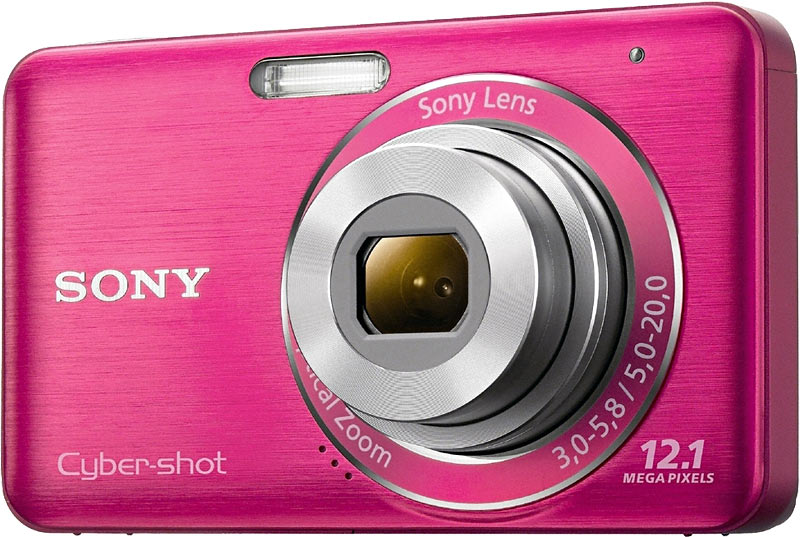
Monday, August 26, 2013

Sony Cyber-Shot wx50: great pocket camera at this price!

Sony Cyber-Shot wx50

This is a powerful pocket camera from Sony and we recommend it for those who want good value for money. It is slightly old [more than a year now] but nothing great has changed since then except for wider screen and touch screens. Touch screens have their disadvantage too, as the controls are dim outdoors. Being a small digicam, its control are slightly smaller than other cameras.

At present the camera is available for around Rs. 7400 though some dealers are charging up to Rs. 8300 also. At around Rs. 7400, it is a great bargain.
Sony-camera-wx50

Among the good features of this camera, are –
-its very light weight and size. It is an ultra-compact model;
-low price (comparable cameras from other brands might cost you a thousand bucks more);
-many features for amateur photographers that lead to sharp images, less chance of hand-shake, good photos in low light conditions, ability to take multiple shots of a wide scenery; 5x optical zoom; 16 megapixel image size; HD video quality.

But let us caution you that it is NOT a super quality camera. If you want to buy cameras with very high zoom, size in megapixels, etc etc, you will have to shell out much more money. But, seriously, for your day to day needs and travel photography, do you really need those features?

DISCLAIMER: I have not received any consideration for reviewing this camera from Sony or any of its associates.

Sunday, August 18, 2013

Wi-fi on digital camera: worth it?

All major manufacturers have come out with point to shoot cameras with wi fi connectivity. There are also Eye-fi cards available that connect through wi fi.

If you like a camera by its features and looks, go for it, but not because it has wi fi connectivity feature. Things will definitely change in future but as of now pocket cameras do not offer great value with wi fi.

Advantages of wi fi in pocket camera, especially when on vacation


  • You can quickly share your photos with others on Facebook etc. 
  • You can send photos to a photo site or email to yourself, thus clearing your camera's storage for more photos.
  • You need not carry wires to connect to internet.
  • You can make use of free wi fi available at airports, stations, cafes, malls and so on.

Problems with camera wi-fi


  • It drains your camera's battery.
  • It is not very reliable.
  • Pocket cameras do not have big buttons, and keyboard to type password, so using wi fi can be irritating.
  • Many wi fi connections are not good enough to send quality photos over internet.
  • Many cameras allow only small photos to go through wi fi.
  • Free wi fi can be risky: hackers can download your photos or steal some other data, and viruses can infect your camera.

If on vacation and need to send photos over the net, use internet available in the hotel [though it it might be costly] or in an internet cafe. Or you can decide to use your cellphone to send photos instantly because at least wi fi there will be less cumbersome. Eye fi cards too go bad and are not too helpful.

Saturday, August 10, 2013

Canon IXUS 255 HS: good stylish pocket camera

This is a sleek new model from Canon, costing around Rs. 12 thousand in Delhi as of August 2013.


canon-IXUS-255hs-camera
Among its likable features are-
  • 10 x optical zoom
  • image stabilisation
  • light weight: 125 gram
  • HD movie, with dedicated button for video recording
  • wi-fi to connect wirelessly to PC or smart devices

As with other cameras from Canon and other brands, it boasts of high image size (12.1 MP), numerous shooting modes and 3" monitor. Its brochure talks of a great number of speed, aperture and ISO variables, which are not of much use in compact cameras.

This model is available in black, silver, pink.

Overall, a good compact / pocket camera, with Canon guarantee of quality. Nothing exceptional, but light-weight and stylish [like the gaudy pink?].

Monday, August 5, 2013

Nikon Coolpix S4200

I found a camera shop boy pushing Nikon Coolpix S4200 to a customer with zest and was provoked to write this review [after a long gap, sorry].
I too posed as a customer and asked for specs. Then I did a bit of search on Nikon website. Here is the review.
People who want an inexpensive but good camera often ask for a range below Rs. 10,000. But in return they might not get what this money should get them. Nikon is a very good camera brand and this camera also boasts of good lens, high zoom and good picture size, but should have  been  priced around Rs. 7000 and not around Rs. 8500 as it costs now.
Nikon coolpix
Good things about it:

Slim body
Touch-screen navigation
Image stabilisationOptical zoom of 6 x.
Image size up to 16 megapixel
Many shooting modes
Can take HD movie
Claimed good battery life; Li-ion battery

Almost useless feature:

Many in-built filter effects

Thursday, January 10, 2013

Are Sony cameras the best?

A friend today asked this question and I asked back, why did he think so. His impression of Sony seems to have been made based on high popularity of Sony LCD televisions and also  the sleek designs of Sony pocket cameras.Sony's advts saying that its battery lasts much longer and it uses Carl Zeiss lens also add to customer getting swayed towards their cameras.

But the truth is that all major camera makers have similar quality of lenses and sensors. The overall design and build quality are also nearly similar. What sets a particular model apart is the features that it has, e.g. zoom. Before buying a camera, one should match such features with one's requirement. For example, whether one wants to make prints or keep the photos in digital formats only; whether one needs to shoot distant objects (e.g. wildlife) too often; and so on.


Tuesday, October 23, 2012

ultra-compact camera, worth the price?

Let's introduce you to the COOLPIX S01camra, a highly compact one, and yet with some good features.

The selling point of this mini is its size; it fits into your closed palms: it is even smaller than most smartphones. To compensate for lack of space for buttons, it has touch screen for display as well as setting changes. 

The camera boasts of about 10MP picture size and 3x zoom, good qyuality of pics and also HD quality movie recording. 

But, is it worth the price it comes for: about Rs. 7000 [or $140] at present? Yes, only if you - especially ladies - were in the lookout for a camera that was feather-witht and small, so that you could fit in your pocket / purse and carry it everywhere. But why not use the smartphone camera, if you want to keep yourself so light? Some solace here: its optics are likely to better than most phone cameras, even those with very high pixel counts. Then it has built-in flash, not found on many phone cameras.

The camera comes in white, silver, pink and red colors.

digital-camera-ultracompact

Saturday, September 8, 2012

GIMP- the perfect photoshop alternative

GIMP is a free image editing software that gives the proprietory Photoshop a good run. In almost all aspects of editing images, it is as good as Photoshop. I have been touching and improving upon photos with this great software for ages. There are some very minor compartments where Photoshop is still better but these are seldom required even by professional photo editors.
GIMP has recently come out with its 2.8 version. It is superb, but has some bugs. You can go for the sturdy and highly functional version 2.6.
What is more, GIMP has a huge fan following and you can get support from these GIMP users. There is also an exhaustive tutorial. There are thousands of sites talking about tips and tricks that can be done through GIMP.
If you have questions about GIMP, you can send them as comments to this post. I will try to help or guide you to the right source.

Thursday, September 6, 2012

Panasonic Lumix DMC-FH4: OK at this price

fx4-Panasonic-Lumix


Lumix FH4 is a rather good camera at this price (Delhi: Rs. 4500 or less: equivalent to ~ $85)

This pocket camera comes with 14 MP censor and HD video recording and 4x optical zoom. Its ISO goes up to 1600 and it also has high sensitivity mode with ISO at 6400.


Panasonic also boasts of iA (intelligent automatic) mode: “You just choose the iA Mode, aim at your subject, and shoot. Six detection and correction functions are simultaneously activated to optimize the settings, so you get stunning photos every time.”

Tuesday, August 28, 2012

Sony HX-100V: will you buy it?

Sony Cybershot HX-100V is a superzoom camera, with 30x optical zoom. It is often branded as a semi-DSLR with its zoom, goo quality video and other features.

However, at the price of Rs. 21,000, I won't recommend it. It is neither here nor there. If you are into professional photography, why go for 1/2.3 sized mini sensor? You are not going to get as good results as from an entry-level SLR. If you are a hobby photographer, why spend this much amount?

super-zoom-digital-camera

Sunday, August 26, 2012

Canon PowerShot SX150 - a super affordable superzoom

Canon PowerShot SX150 IS

This camera is a superzoom pocket camera that scores great in most compartments:
Zoom – 12x
Video – HD [720 pixels, at 30 frames per second Zoom available in video mode too
Very sharp images
Sturdy make with professional looks
Many pre-set modes as in the case of most Canon cameras
Large display screen
Image stabilization: reduces shakes
14 megapixel CCD sensor
The best aspect of this camera is its price. You can get it at below Rs. 7500 ($150)in Delhi.

But it has some problems too, and of course such problems occur in many other pocket cameras:
Noisy images at high ISO levels: the noise is prominent even at 400 ISO
Performs poorly in dim light conditions
Heavy, large in size


In all, it is a camera for people who’re going to use it for outdoor photography. At this price, you are not likely to get 12x optical zoom, that too in a Canon camera.  

digital camera from canon
Add caption

Tuesday, August 21, 2012

Canon PowerShot ELPH 300 HS: fine camera

This excellent featured camera comes in the range of around Rs. 11000-11500 in Delhi.
A good pocket camera by all means if you want a good and yet very small sized camera.
Specifications:
very thin design
12 mp
optical zoom 5x
shooting speed good
1080 HD video
ISO 100-3200
shutter speed 15 – 1/2000 sec
wide aperture 2.7
red eye removal
dedicated movie button
comes in black, red, silver colours
good low light performance  
canon-powershot

Bargain digital camra prices in New Delhi

As on today, the following cameras are available at bargain rates in Delhi. Bargain with the dealer to get these or lower rates and don't pay any higher:


Olympus VG 150 --Rs. 4300
Nikon Coolpix L26 --Rs. 5300
Canon Powershot A810 --Rs. 5500
Sony Cybershot W630 --Rs. 8200
Nikon  Coolpix S6200 --Rs. 9000
Fuji Finepix 2980 --Rs. 9500

Sunday, August 19, 2012

Pocket camera buyers, check your digicam IQ

If you are a pocket camera buyer, you will find it interesting and helpful to check your digital camera IQ. Just answer these 20 questions, check with the correct answers given at the end, give yourself 5 marks for each correct answer and see the score for yourself. When you think a statement is not fully correct, take it as 'false'. A score of more than 50 is good, more than 75 excellent.

digital camera questions


1. I have a pocket camera of 4 megapixels. It is not enough for amateur shooting during picnics etc, and I should buy one of  at least 10 mp as the new technology demands cameras with higher mp's. [True/false?]
2. My pocket camera has ISO range of 100 to 1600. It also has shutter speed of up to 1/800 second. It is definitely better than my friend's camera with ISO up to 800 and shutter speed up to 1/400 seconds.  [True/false?]
3. I should buy the first camera out of the two with the same price:
A. 4 mp; zoom 3x optical; CMOS sensor; good battery life; in-camera red-eye removal 
B. 5 mp; zoom 4x digital; CCD sensor; in-camera editing tools; very small size  [True/false?]
4. My mobile phone camera is 8mp, no zoom, with no flash. I should spend money on a pocket camera even  if  my pocket allows me to buy a digicam of only 5mp, 3x zoom, inbuilt flash. I use camera for routine shooting of my children, social events, picnics, etc.  [True/false?]
5. A12 mp camera that came with my friend's mobile phone he bought last year [=2011] is no better than my 5 mp pocket camera that I bought 4 years back as my camera has better lens, some zoom, more controls. [True/false?]
6. A pocket camera with shutter speed of 1/3200 will shoot excellent shots in low light. [True/false?]
7. A pocket camera if used properly can give excellent shots at day time but has severe limitations in poor light. [True/false?]
8. A pocket camera's sensor is smaller than that in a digital SLR. [True/false?]
9. In most conditions, if used professionally and with manual controls, a good pocket camera will give as good quality photos as a DSLR or a reel camera. [True/false?]
10.Other things being equal, a light weight camera is better to handle than a heavy camera.
 [True/false?]
11. The quality of picture taken from a digital camera depends more on lens quality, stability, composition of shot, light and sensor quality much more than megapixels, available zoom, editing software that comes with it, and numerous customised modes given in the camera. [True/false?]
12. Some cameras produce 'red eye' when the subject is standing directly under the sun. [True/false?]
13. Photos taken by my cameras in low light often have shakes. The defect is with the camera's image-stabilisation mechanism. [True/false?]
14. Pocket cameras are not meant to be used with tripods. The results are no better. [True/false?]
15. Pocket cameras give you all the freedom to just keep shooting, but you must prepare yourself well with right exposure, light, composition etc. You cannot edit a poor photograph to perfection with Photoshop later on. [True/false?]
16. Digital camcorders have more zoom, bigger lenses and better optics. The shots taken by them are therefore better than digital still cameras. If I intend to buy a mid-range camcorder, I need not go for a still camera. [True/false?]
17. A 5mp camera can take a shot of 2mp too. The mp specification tells you the maximum size of photos that can be taken with that camera.[True/false?]
18. Photos taken with pocket cameras, when copy-pasted into a computer, will give poor quality images. [True/false?]
19. We can use ordinay cells into a digital camera. It is a marketing trick of camera makers to advise that we use only rechargeable or heavy-duty cells. [True/false?]
20. All pocket cameras are the same. It is the person behind the camera what matters. [True/false?]

Correct answers:

1 F
2 F
3 T
4 T
5 T
6 F
7 T
8 T
9 F
10 F
11 T
12 F
13 F
14 F
15 T
16 F
17 T
18 F
19 F
20 F


Friday, August 3, 2012

Automatic and fill flash settings for pocket digital cameras

Pocket digital cameras have a built in flash that cannot be taken out like that in professional cameras nor can an external flash be used. The flash itself is not too strong. So, it has many limitations. We have talked and will talk about these aspects elsewhere. Right now, let’s discuss the difference between automatic and fill flash in pocket cameras. 


Many people using digital cameras ignore the subtle difference between these two and spoil their photographs in terms of light and details.


Automatic flash is the setting in which the flash bursts when the available light is low. When the camera sensor finds that the available light is not sufficient, it first adjusts shutter speed, aperture and ISO sensitivity. If it still does not get enough light, it orders the ‘automatic’ flash to burst. So, if the available light is good, this flash does not come on.


On the other hand, ‘fill flash’ bursts irrespective of available light. How does this small knowledge help? Well, it gives you the opportunity to use flash in good light conditions, and it really adds to the lighting of the main object in outdoor situations. Suppose you want to take a photo of a child in a park. The ambient light will usually be quite good but the child’s face would quite possibly not have enough light to give fine details. Use fill flash and you have a pleasant face full of expressions and glowing skin color. Another example. When you take people’s photos outdoors, your camera would calculate the incoming light either of the middle of the shot or the entire shot [based on your settings]; in both these cases, the faces are likely to be dimly lit. Fill flash would remove this problem. Fill flash is also great when your main object is back-lit [light source in front of camera]. It also helps in getting contrast in very dull and diffused ambient light conditions [e.g. a cloudy day].  

Saturday, July 28, 2012

A digital camera that projects? Nikon S1200PJ

Nikon Coolpix S1200PJ is a digital camera with a difference, till all cameras come with a similar feature – projector.

This is a 14 MP camera with 5x zoom. It comes in pink and black colors. At about Rs. 13500 [$ 370] we find it slightly expensive, but if you like to [or if it is your professional requirement] to project photos and videos in up to 4x3 feet sizes on any plain flat surface, it is the camera you’d love to have.

Moreover, the projected image is sharper and brighter as compared to similar projection cameras primarily due to use of three-lamp projection.
digital-camera-that-projects


Sunday, July 22, 2012

These colorful digital cameras: will they become fashion statements?


One noteworthy trend of late is the use of vibrant colors on camera body. So much so that often that the tiny cameras look like fashion accessories. When I asked ladies in my company whether they’d go for the bright colored digital camera if they were to buy a new one, the replies were mixed. 

My impression, so, is that people still want to go for the formal camera colors. Yes, they look professional. When even high-end cameras start coming in bright colors, the overall perception would change and more people would go for colorful pocket cameras.

Thursday, July 19, 2012

Fujifilm FinePix SL series cameras

Fujifilm’s FinePix SL series cameras come with a great zoom lens that is reported to get fine pictures even at very high zoom levels.

All these cameras are new and come with high zoom ranging from 24x (SL 240) to 30x (SL 300). Yet they are not too high priced. For example, SL 300 is available in Delhi for around Rs. 18,000 [$360].

These cameras also come with high ISO range going up to 6400, so you can take pics at very dull light conditions too. The CCD for SL 300 is 14.3 megapixel, 1/ 2.3 inch in size.

You can record movies in 1280X720 pixels at 30fps, which is quite good. Moreover, you can use optical zoom in video mode, which is often not available in pocket cameras.

We won’t talk about the numerous shooting modes, picture stabilization and other stuff that is available routinely in this range of cameras. The build quality and shape of the cameras of this series [for that matter, all Fuji cameras] is quite professional.

Overall a very good camera in this price range.

great-digital-camera

Friday, July 13, 2012

Selectiong a digital camera: similar Nikon, Sony compared


How different it is to make digital camera selection!

For a non-professional camera buyer, the range of compact / pocket cameras available in the market from top brands is so confusing that making a decision becomes quite a burden on the brain. Even if you take a professional photographer with you to the store, he might not be of great help when the specs are so nearly matching, or pros and cons are evenly balanced.

Here we compare the two cameras of the same price bracket [present Delhi price around Rs. 13000]:

Nikon Coolpix L120 and Sony Cybershot DSC-HX7V

The Nikon camera is much heavier [about 400 g] than the Sony [about 200 g].  Both look equally trendy, though Nikon gives a feel of professionalism more than the Sony piece.
Both have many similar specs when it comes to standard settings, aperture, speed, sensitivity, back display, connectivity, dimensions etc.

Both have similar censor sizes and nearly same megapixel counts: Nikon 14.1, Sony 16.2.
The biggest difference is in the zoom: while Nikon comes with an amazing 21x optical zoom, Sony has respectable but lower 10x zoom. This can make a great difference if you go for shoots that require zoom, such as wildlife photography.

Another difference worth mentioning is the video size: Sony can take videos in 1920x1080 size at 60 frames per second, but Nikon’s maximum is 1280x720 at 30 frames per second. Both are decent for a pocket camera but Sony is a clear winner here.

Nikon cameras take heavy duty AA  batteries that can be easily purchased at departmental stores and can be recharged with universal battery chargers. Sony cameras come with their proprietary batteries and these can be charged only with their own chargers. It is also worth remembering that the charge in Sony batteries lasts longer than a pair of AA batteries. 

Now, decide which digital camera  you want out of the two?

Difficult, isn't it. As for me, other considerations being nearly similar, I’d go for the Nikon camera for its built, zoom and use of standard batteries. 

Nikon COOLPIX L120Sony DSC-HX7V/B

Monday, July 9, 2012

Do not edit photos in camera itself

Many cameras these days come with editing software that claims to edit photos beautifully. We’d quickly advise three things regarding editing:

One. Do not do in-camera editing. If you need to edit photos, use a good editing software. If the camera came with a CD / DVD of an editing software, it would do fair amount of day-to-day editing. Such editing would include cropping, cutting from edges, minor color corrections, red-eye removal [when people show up with red eyes in photos], flipping the photo horizontally or vertically [to correct photos when taken from a tilted camera], turning into black-and-white, etc.

Two. If you need to edit photos for color correction, fine editing of objects in a photo, etc, go for only professional editing software such as Photoshop (very expensive) and Gimp (free for download). Do not edit the photo too much unless you have some sort of expertise on these software.

Three. Save a copy of the original photo before editing it. Editing often plays with the intrinsic quality of the photo, as explained in other posts on this website.

Thursday, July 5, 2012

The rule of thirds: one fine rule of photo composition


In the fields of photography, graphic designs and drawing-painting, the rule of thirds is one of the first lessons taught. So, this rule is also one which people throw at you to show they know more than you.  However, you must know the rule so that you compose photos properly. Later, when you are an expert, you can break the rule if that would lead to even better composition.

It has been found through research that our eyes are not focused at the middle of a drawing, painting  or photo but at some distance from it. The rule of thirds defines those places.

What the rule says is as follows: If you divide a driving into three parts horizontally and vertically, the main lines should be aligned with these lines and main objects should generally be at the intersections of these lines.

Look at the drawing here. The vertical object is aligned with the first vertical line. In a photo with a standing person, tree or tall building, you should try to keep these prominent  objects near the first or the second vertical line. Now see the horizontal line. This is aligned with one of the two horizontal dividers. You should keep the horizon, especially when it is near straight [e.g. sky over sea] on either the upper or lower horizontal divider. Now look at the round object. It is at one of the intersections. The rule of third says that prominent objects [e.g. the sun, a flower, a human head] should be at these intersections. 
rule-of-thirds-in photography